Involvement of Scout Community in Disaster Preparedness through Open Mapping and OpenStreetMap Utilization

The Scout Movement is one of the communities that play a significant role in impacting various humanitarian activities in Indonesia. Besides having an organized network and system, it also has a very large number of members with different levels, some of which are based on the education system levels in Indonesia. Therefore, the involvement of the Scout Movement in various humanitarian activities is systematic and reaches various levels of society. Furthermore, their collaboration with various other humanitarian organizations makes humanitarian activities more comprehensive and targeted.

SiPetani DKI: Empowering Agriculture in Jakarta Through Digital Innovation

Special District Capital of Jakarta (DKI Jakarta) is Indonesia’s most densely resided province, with 10.6 million residents (Indonesia Statistics, 2021). Due to immigration and industrialization, DKI Jakarta has become a megacity with the highest population density of 15,978 people per square kilometer (Indonesia Statistics, 2021). However, this rapid population growth in Jakarta led to several issues, including shrinking agricultural land.

Improving OpenStreetMap Quality Through MapRoulette

OpenStreetMap is a world map that is free and open, allowing anyone to add, edit, and download its data. With its free and open nature, the data available is very rich because anyone can contribute. Just imagine, people all over the world collaborating to edit OpenStreetMap, making its data so up-to-date as it can be updated in real-time! However, on the other hand, some people doubt the quality of the OpenStreetMap data itself because even those unfamiliar with mapping can contribute to it. To ensure the quality of OpenStreetMap data, many platforms can help us improve it, and one of them is MapRoulette

Wiki Peta Bahasa: Unveiling Indonesia Traditional Languages Diversity through Ushahidi as an Open Web Maps

It is undeniable that language is a cultural heritage, often serving as a defining aspect of a culture’s ethnic identity. an alarming reality looms as approximately 40% of traditional languages confront the threat of extinction, with nearly 3,000 languages facing potential disappearance by the century’s end (UNESCO, 2022). This decline is spurred by globalization, modernization, the blending of international cultures, and the dwindling number of speakers. In response, UNESCO designated February 21 as International Mother Language Day to combat this imminent loss.

Enhancing Youth Participation in the Development of Bandung City through Ushahidi Platform

Over a year, the Safe and Sound Cities (S2Cities) program has been implemented in Bandung City. This program aims to increase youth participation in building a safe and comfortable Bandung City for their future. With this concept, youth are actively involved, even influencing the decision-making processes for urban development policies. There are many ways in which youth can contribute to this process, ranging from small-scale initiatives to larger ones. Individual youth, as well as youth communities in Bandung, also can participate in this program.

Exploring Training Initiatives and Participatory Mapping Series in Dagesime Magepanda and Ria Wajo Watersheds

Water is the essence of life, sustaining all living organisms on our planet. However, uncontrolled water flow can pose serious threats, leading to flooding and potential damage to homes and buildings. To address this challenge, watersheds play a crucial role. Also known as drainage basins, watersheds are regions of land where water collects and streams into larger bodies of water, ensuring a controlled flow.

Community-Driven Handwashing Stations in Response to COVID-19

Indonesia confirmed its first cases of COVID-19 on 2 March 2020, when a dance instructor and her mother tested positive after arriving from Japan. The country encountered significant difficulties in containing the virus due to its large population, high population density in specific regions, and limited healthcare resources in certain areas. Consequently, by 9 April 2020, the pandemic had reached all 34 provinces in Indonesia. As of 5 June 2023, Indonesia has reported 6,812,127 COVID-19 cases, the second highest in Southeast Asia. Regarding fatalities, Indonesia ranks second in Asia and ninth globally, with 161,879 deaths recorded.

Engaging the Crowd: Mapping Lakes in Jabodetabek-Punjur for Flood Mitigation

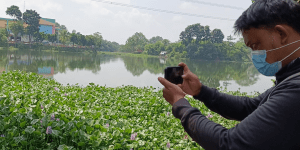
Floods are a relatively common occurrence in Indonesia due to the country’s geographical location, climate patterns, and natural topography. Indonesia experiences riverine and coastal flooding, varying frequencies depending on the region. Over the years, the densely populated capital and its surrounding cities (Jakarta, Bogor, Depok, Tangerang, Bekasi, Puncak, and Cianjur or Jabodetabek-Punjur) have experienced catastrophic flooding, most recently in 2020.